Connection in the Complexity: The Power of Relationships in Transforming Our Work
Delivery Mode
Live Online
Date
November 10, 2026
Details
- Time: 7:00 - 8:30 p.m. (EST) / 4:00 - 5:30 p.m. (PST)
- Length: 1.5 hours
- Continuing Education Credits (CE): 1.5
- Discounts: Attendees receiving NO CE credit - FREENOCE or Alumni & Students 30% off workshop (receiving CE credit) - AU30
Description
This event is FREE for those not receiving CE credit. Use code FREENOCE in your cart.
In a world that feels increasingly fragmented, relationships serve as a vital force for sustainable change. Join us for an interdisciplinary conversation spanning counseling and therapy, environmental education, education, and leadership, centered on how Relational-Cultural Theory (RCT) is applied in real-world settings. Featuring panel perspectives on relational curiosity, mutuality, and communities of practice; this session invites scholar-practitioners to explore the next era of relationally engaged work.
For attendees not receiving CE credit, please register directly on Zoom.

Learning Goals
- Identify core RCT principles and their application to counseling, therapeutic practice, and teaching, learning, and educational leadership.
- Examine the role of relationships, power, and context in supporting growth and well-being.
- Apply relational curiosity and mutuality to strengthen therapeutic and community-based practice.
- Explore relational practices that foster connection, collaboration, and sustainable change in educational settings.
Relational-Cultural Theory & Antioch University
In a world that feels increasingly fragmented, RCT@AU creates opportunities to explore how relationships can support meaningful change in our workplaces, classrooms, communities, and organizations. Rooted in the understanding that people grow through connection, Relational Cultural Theory (RCT) offers a relational lens for navigating complexity, strengthening communities, and creating conditions where people can learn, heal, and thrive.
Through interdisciplinary conversations, shared learning, and opportunities for connection, this event, Connection in the Complexity: The Power of Relationships in Transforming Our Work, brings together people working across leadership, social change, mental health, and education. Together, we will explore how relational practices such as curiosity, mutuality, empathy, and communities of practice can shape the way we lead, teach, support others, and participate in positive social change.
Panel Discussion
Amy Rutstein-Riley, PhD, MPH – Moderator
Katie Penn, PhD, Leadership and Change
Myriam Barenbaum, LCSW-R, MPH, Mental Wellness
Mindith R. Rahmat, Psy.D.
Instructor
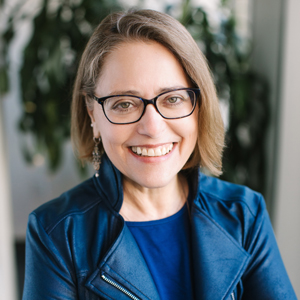
Amy Rutstein-Riley
PhD, MPH Dean, School of Interdisciplinary and Professional Studies and Director, PhD Program in Leadership and Change
Amy Rutstein-Riley, PhD, MPH is a highly collaborative leader, seasoned educator, and interdisciplinary scholar. Her current research activities focus on Women’s Leadership in Higher Education, Trauma-informed Leadership, and girls’ and emerging adult women’s development.
Prior to joining the Graduate School of Leadership and Change, for the past eighteen years, she has served in a number of roles at Lesley University, including Director of the PhD Specialization in Adult Learning and Development, Dean of the Faculty, Chair of the PhD in Education Studies, Dean of the Graduate School of Education, and, most recently, Associate Provost of Academic Affairs.
Katie Penn
PhD, Vice President, Chief Diversity and Inclusion Officer at Bentley College
Alumna of Antioch University Graduate School of Leadership and Change
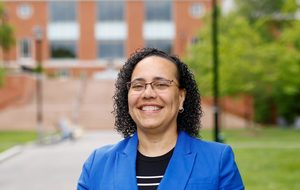
Dr. Katie Penn is a strategic change leader with more than 20 years of experience advancing organizational effectiveness in education. A systems thinker and collaborative leader, Katie helps organizations shape change by uncovering the structural and cultural barriers that inhibit progress and identifying opportunities to create more equitable and inclusive cultures. She is skilled at guiding teams through complex change with trust, compassionate accountability, and a commitment to learning – helping people ask better questions, navigate uncertainty, and turn change into meaningful progress. Currently, Katie is exploring how Relational Curiosity can nurture resilient organizations through connection and collective meaning-making in times of uncertainty and change.
Myriam Barenbaum
LCSW-R, MPH

Myriam Barenbaum, LCSW-R, MPH, is deeply committed to helping to bring Jean Baker-Miller’s and RCT’s work forward in the world. Myriam is a clinical social worker with a private practice in Nyack, NY and an active board member of the International Center for Growth in Connection. She has been a therapist at The Trager Lemp Center for Treating Trauma and Promoting Resilience in Yonkers, NY for the past decade. She also runs a weekly support group for domestic violence survivors. Relational Cultural Theory is foundational to all of her relationships, both professionally and personally.
Mindith R. Rahmat
Psy.D., Interim Chair and Core Faculty in the Masters of Arts in Clinical Psychology

Mindith R. Rahmat, Psy.D., is an educator, scholar, and academic leader committed to creating learning environments where students and educators can experience connection, belonging, curiosity, compassion, and meaningful growth. She serves as Interim Chair and Core Faculty in the Master of Arts in Clinical Psychology program at Antioch University Santa Barbara and as Antioch University’s inaugural Teaching and Learning Center (TLC) Faculty Fellow, where she contributes to university-wide efforts to support faculty development, relational pedagogy, inclusive teaching, and student-centered learning.
At the heart of Dr. Rahmat’s work is the belief that teaching is fundamentally relational. Her scholarship explores how the quality of our relationships with learners, with one another, and with ourselves shapes engagement, belonging, resilience, well-being, and the possibilities for transformative learning. Her work brings relational teaching into conversation with compassion-focused pedagogy, mindfulness, trauma-sensitive education, therapeutic presence, and inclusive and accessible approaches to learning. Dr. Rahmat earned her Doctor of Psychology in Educational Psychology from Alliant University and a Master of Arts in Clinical Psychology from Marshall University. She is currently completing a second doctorate, a Ph.D. in Psychology, Public Policy, and Law, at the California School of Professional Psychology at Alliant International University, with anticipated completion in spring 2027. Her interdisciplinary training includes trauma-sensitive mindfulness, mindful self-compassion, mindfulness-based approaches, yoga therapy, and compassion-based interventions and therapies. These perspectives inform her commitment to educational spaces that honor both academic rigor and our shared humanity. Dr. Rahmat’s work reflects a guiding conviction that relationships are not an addition to teaching; they are part of the conditions that make meaningful learning possible. Through compassion, authenticity, mutuality, dignity, and belonging, educators can cultivate classrooms where learning and well-being can flourish together.
Continuing Education
Individuals must attend the entire event to receive continuing education credit. Partial credit is not available. Additional requirements regarding enrollment, documentation and eligibility may apply.
Continuing Education Certificates
Course Completion certificates will be awarded at the end of the course in exchange for a completed evaluation form. Individuals who successfully complete the program will receive a certificate for 1.5 continuing education credit hours. This certificate may be submitted to your state’s licensure or certification board for their consideration in meeting renewal requirements. CE credit varies from state to state. Participants are encouraged to check with their licensing board to determine if this offering qualifies for acceptance as Continuing Education credit.
National Board for Certified Counselors (NBCC)
Antioch University New England - Clinical Mental Health Counseling Department has been approved by NBCC as an Approved Continuing Education Provider, ACEP No. 4338. Programs that do not qualify for NBCC credit are clearly identified. Antioch University New England - Clinical Mental Health Counseling Department is solely responsible for all aspects of the programs.
Accommodations
To request accommodations for special needs, please email the Program Administrator at [email protected].
Terms & Conditions
Cancellations received in writing 7 days before the date of the event are entitled to a full refund. Cancellations received between 6 and 3 days before an event are entitled to a 50% refund. Cancellations 2 or less days before an event will not be eligible for a refund.