• Skip to main content
Antioch.edu
Explore Degree Programs

Antioch University Continuing Education

  • Professional Development

    Professional Development

    Focus Areas

    • Counseling, Psychology, and Therapy
    • Environmental Studies
    • Graduate Leadership & Management
    • Military
    • Personal Enrichment

    Specific Programs

    • Ethics
    • Licensure Renewal
    • Partnered Programs

    Delivery Mode

    • Hybrid
    • In-Person
    • Live Online
  • Academic Courses

    Academic Courses

    Focus Areas

    • Clinical Mental Health Counseling
    • Counseling, Psychology, and Therapy
    • Education
    • Environmental Studies
    • Experienced Educators
    • Graduate Leadership & Management
    • Humane Education
    • Nature-Based Early Childhood Education
    • Trauma-Informed Education & Dyslexia Studies

    Semester

    • Fall 2026
    • Summer 2026

    Delivery Mode

    • Hybrid
    • In-Person
    • Online
    • Various
Hide Search

CAMFT

Shifting the Caregiving Conversation in the US Through Inclusion

· June 9, 2026 ·

Two people sit on a bench with arms around each other, seen from behind, overlooking a harbor.

This presentation will provide an overview of children, youth and young adults who assist in the care for an ill or injured family member, including military connected service members and veterans. The presentation will include an overview of existing data addressing health, social support and well-being needs of these “young carers”, guiding attendees through existing programs and opportunities for organizations and providing opportunities to integrate young carers into their current care programs.

Learning Goals

  1. How to identify children, youth and young adults providing care in the United States.
  2. Integrate young carers into existing care supports and programming.
  3. Assess opportunity for policy advocacy for young carers in local, state and national care policy.

Instructor

Melinda S. Kavanaugh

PhD, LCSW

Dr. Kavanaugh is a Professor of Social Work at the Helen Bader School of Social Welfare, University of Wisconsin–Milwaukee, and a Licensed Clinical Social Worker (LCSW) with extensive clinical and research expertise in health care professional education and caregiving across the lifespan. Her work is grounded in a deep commitment to advancing understanding, education, and support for individuals and families navigating complex health and caregiving experiences.

Funded by federal, state, and non-profit organizations, Dr. Kavanaugh conducts translational research focused on young carer populations, including those impacted by ALS, cancer, and Alzheimer’s disease, as well as individuals and families within military-connected and veteran communities. Her research addresses caregiving in the context of spinal cord injury, traumatic brain injury (TBI), and post-traumatic stress disorder (PTSD), with a particular emphasis on translating research findings into accessible, real-world resources and educational tools.

Dr. Kavanaugh partners closely with organizations such as the Elizabeth Dole Foundation and the Wounded Warrior Project to develop programming and resources for “Hidden Helpers,” including youth activity books and family-centered supports designed to increase visibility, understanding, and resilience among young caregivers. Her scholarship has also informed the development of a series of books for children, young adults, families, and schools, including a graphic novel translated into 11 languages, extending the reach of her work internationally.

In addition to her academic and research roles, Dr. Kavanaugh serves as President of Global Neuro YCare, an international non-profit organization dedicated to developing linguistically and culturally accessible programs and supports for health care professionals, children, youth, and families affected by neurological disorders worldwide. Through this work, she has helped advance innovative educational initiatives, including the animated short film “LUKi & the Lights,” which supports children and families in understanding and communicating about ALS/MND.

Who Should Attend

This presentation is designed for professionals and community leaders who support children, youth, young adults, families, caregivers, military-connected populations, and veterans. It is particularly relevant for mental health professionals, educators, school counselors, care coordinators, case managers, nonprofit leaders, policymakers, veteran service providers, and community-based organizations seeking to better understand and support young people who provide care for family members. Participants will gain insight into the unique experiences and needs of young carers and explore practical strategies for identifying, supporting, and advocating for this often-overlooked population within healthcare, educational, social service, and community settings.

CE Credit Registration

Participants of Melinda Kavanaugh’s Shifting the Caregiving Conversation in the US Through Inclusion Keynote can register on 7/13/2026 for an NBCC, CAMFT approved CE credit certificate through Antioch University for 1 CE credit. A separate link will be provided.

PRICE:

| $35 | Participants can request a Continuing Education certificate by registering through the provided link (available 7/13/2026) and by completing a survey.

Assessing Suicide & Safety Risk in Military Veterans: Best Practices

· May 18, 2026 ·

This workshop equips clinical mental health counselors with the knowledge and tools to conduct effective risk assessments through a military- and veteran-specific lens. Participants will gain a deeper appreciation and understanding of military culture, exploring how this population’s unique strengths and experiences intersect with potential clinical risk factors. Drawing from both lived military experience and research on military-veteran mental health, this session challenges traditional assumptions and expands perspectives on working with veterans and their families.

Through case examples and applied learning, counselors will enhance their ability to identify and assess military-specific risk factors, apply evidence-based assessment tools, and develop culturally responsive safety plans that align with veterans’ values and help-seeking patterns.

Learning Goals

  1. Identify and assess military-specific risk factors
    By the end of this workshop, participants will be able to identify at least 5 unique risk factors common to military-veteran populations
    (such as combat exposure, moral injury, transition stress, and access to firearms) and integrate these factors into comprehensive
    suicide and violence risk assessments.
  2. Apply evidence-based risk assessment tools adapted for veteran populations
    Participants will be able to select and administer at least 2 validated risk assessment instruments appropriate for military-veteran
    clients (such as the Columbia-Suicide Severity Rating Scale or veteran-specific screening tools) and interpret results within the context
    of military culture and experience.
  3. Develop culturally responsive safety planning and intervention strategies
    Participants will be able to create tailored safety plans and risk management interventions that account for military values, veteran
    help-seeking behaviors, and available veteran-specific resources (including VA services, veteran peer support, and crisis lines), while
    addressing barriers to care unique to this population.

Instructor

Dr. David Gosling

PhD, LPC (VA, WI), NCC

Dr. David Gosling is a Licensed Professional Counselor (LPC), Assistant Professor and the Director of Military Counseling in the counseling program at William & Mary’s School of Education. David previously served as a core faculty member in the Counseling, Psychology, and Therapy Department at Antioch University, where he was the co-founder and director of the Military, Veterans & Families (MVF) Counseling Certificate, as well as the Military Connected Student Support Liaison for Antioch University’s five nationwide campuses.

David is a proud alum of William & Mary’s Counselor Education and Supervision program, a former Airborne Ranger-qualified Infantry Officer in the U.S. Army and combat veteran of Operation Iraqi Freedom 06-08, the Honor Graduate of the 2009 Rhode Island State Police Academy and the Distinguished Military Graduate of the University of Colorado’s Army ROTC program in 2004. His other professional pursuits beyond the military, law enforcement and counselor education have included working as an Outward Bound wilderness guide for troubled teens, operating an Islamic nonprofit farm and retreat center and working in veterans advocacy on Capitol Hill. 

Trauma Informed Creative Arts Therapy Program (CE Credit Registration)

· May 7, 2026 ·

Participants of Lucy Barbera’s Trauma-Informed Creative Art Therapy Workshop Program can register on this webpage for an NBCC, CAMFT approved CE credit certificate through Antioch University for 30 CE credits. 

Click here for more information and to register for the full program.

“Trauma is perhaps the most avoided, ignored, belittled, denied, misunderstood, and untreated cause of human suffering.”   
 – Peter Levine, PhD


DATES: 
September 19th, October 10th & 17th, November 7th & 21st, and December 12th, 2026
Time: 10:00 am – 5:00 pm ET (1:00 pm – 2:00 pm lunch break) Program participants must complete 30 hours to receive certificate. 

HYBRID Facilitation: LIVE in PERSON in Kingston, NY and simultaneously over ZOOM

This unique program was designed to assist helping professionals in treating complex trauma, using a multi-modal creative arts approach for integration and healing.  The program provides helping professionals instruction on HOW to immediately apply creative methods, within the context of their practice with diverse populations and WHEN to utilize the Creative Arts Therapies when working with individuals and/or groups, using the following modalities: visual arts, creative writing, movement, music, and the dramatic arts, safely without re-traumatization, within the Window of Time-Tolerance-Reconsolidation.

The TRAUMA-INFORMED Creative Arts Therapy program is open to mental health professionals, human-service providers, teaching artists, and educators who want to understand the neuroscience of trauma and the vital role the creative arts therapies play in mitigating the negative effects of trauma.

WHAT:  The Trauma- Informed Creative Arts Therapy Program consists of 30 Training hours and 6 (built-in hours for one make-up day, should that be necessary for any reason. 

WHERE: This Program will be conducted face-to-face in the Creative Arts Therapy Studio, in Kingston, New York & via ZOOM simultaneously!

PRICE: 
Training |  Click here to register 
Payment can be made in 2 installments: one half to hold your space and the second half is due on the first day of the program).  
Cost includes: All ART SUPPLIES (mailed to you if you are not attending in person)

CE Credits through Antioch University | $35 | Click “Add to Cart” on this page. Registration for CE credits will remain open until Sunday, December 13th, 2026.
If you have already registered for the training, you can request a Continuing Education certificate through Antioch University by clicking “Add to Cart” on this page. 

Instructor

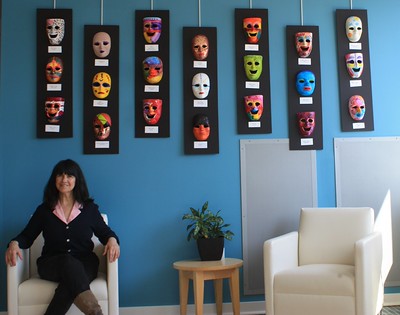
Lucy Barbera

PhD, LCAT

Lucy Barbara headshot

Lucy Barbera, PhD, LCAT, is a Licensed Creative Arts Therapist, whose clinical work spans the medical, psychiatric, and special education settings, as a Creative Arts Therapist, Art Teacher, and Special Education Principal. For over twenty years, Dr. Barbera has served on the faculty of The Humanistic Multicultural Education Graduate Program, at SUNY, New Paltz, where she developed and taught graduate and undergraduate courses in Expressive Arts Therapy and Expressive Arts Leadership & Social Justice. Dr. Barbera is the Founder of the Trauma-Informed Creative Arts Therapy Certificate Program, at U Albany’s School of Social Welfare and an Associate Faculty Member of The Person-Centered Expressive Arts Therapy Program, founded by Dr. Natalie Rogers. Dr. Barbera lectures widely on the healing power of the arts, and curates exhibitions of patient/client expressive art, bringing awareness of the healing power of the arts to the community. Dr. Barbera maintains a private practice in Creative Arts Therapy, using a trauma-informed approach to creative arts therapies.  

When the Screen Isn’t Enough: Crisis Response in Digital Clinical Supervision

· April 27, 2026 ·

As telehealth and hybrid care models continue to expand, clinical supervisors are increasingly responsible for guiding supervisees through high-risk client situations without being physically present. Crisis moments such as suicidality, threats of harm, or acute psychological decompensation expose the limitations of digital supervision and require supervisors to adapt quickly, think systemically, and respond with both clinical and ethical precision.


This training equips counseling supervisors to navigating crisis response within digital supervision contexts. Participants will explore how distance, technology, and role boundaries impact real-time decision-making, risk assessment, and intervention. Emphasis is placed on actionable strategies, including structured crisis response frameworks, real-time supervision techniques, and ethical considerations related to liability, documentation, and jurisdiction. Through applied case examples, attendees will strengthen their ability to support supervisees effectively during high-stakes clinical moments even when the screen creates distance.

Learning Goals

  1. Analyze how digital supervision environments alter risk assessment, communication, and intervention during client crisis situations.
  2. Apply a structured crisis response framework to guide supervisees through high-risk clinical scenarios in telehealth settings.
  3. Integrate ethical and legal considerations into digital supervision practices, including documentation, emergency planning, and supervisor liability.

Instructor

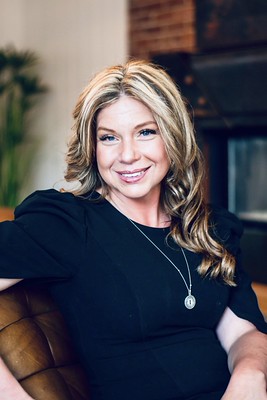
Ali Corey

Dr. Ali Corey

Dr. Ali Corey is a counselor educator, clinician, and leadership consultant with extensive experience in training mental health
professionals and organizational leaders. She holds a doctorate in counseling and serves as a graduate professor, where she teaches
research, clinical practice, and leadership development in counselor education programs. Her professional focus lies at the intersection of trauma-informed care, organizational leadership, and equity-driven practices.

Dr. Corey has worked with educational institutions, clinical training programs, and community mental health organizations to foster trauma-informed leadership approaches that strengthen organizational culture, reduce burnout, and enhance client outcomes. Her scholarship and teaching emphasize strengths-based, relational leadership practices that integrate both clinical knowledge and
evidence-based leadership theory.

Participants in her sessions benefit from her ability to bridge clinical insight with practical leadership strategies, ensuring that complex research is translated into actionable skills for real-world application. With her combined background as a clinician, educator, and leadership trainer, Dr. Corey provides an engaging, research-informed, and practice-oriented perspective on what it means to lead
mental health organizations through a trauma-informed lens.

Dreams, Duty, and Decisions: Counseling Military Spouses on Self Care

· April 23, 2026 ·


Military spouses often carry invisible burdens—balancing caregiving, relocation, and constant adaptation while quietly setting aside their own goals and identity needs. For clinicians, supporting these clients requires a nuanced understanding of how chronic role strain, shifting family systems, and identity disruption intersect to produce burnout.

This 90-minute professional development session equips counselors with tools to identify the psychosocial stressors most common among military spouses, evaluate existing interventions for effectiveness, and design practical, individualized action plans that foster resilience and self-redefinition. Through case-based discussion and reflection, participants will deepen their capacity to help clients reclaim agency, reframe purpose, and integrate self-care into the rhythms of military life.

Learning Goals

  1.  Identify common psychosocial stressors and role expectations that contribute to burnout and identity disruption in military spouses.
  2. Evaluate the effectiveness of existing clinical approaches for supporting military spouses experiencing burnout or identity loss.
  3. Design a brief clinical action plan incorporating at least one intervention to reduce burnout and promote resilience in a military spouse client case.

Instructor

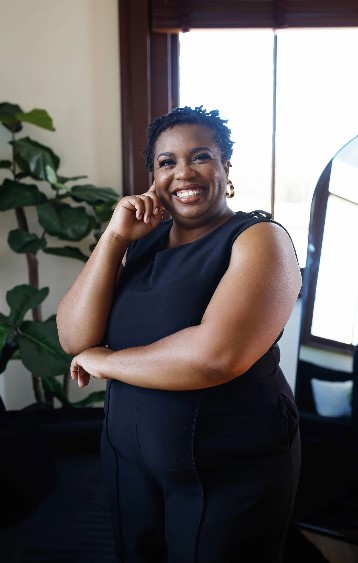
Cecily Moore

LPC-MHSP, LMHC


Cecily Moore

Dr. Moore is very excited to be a part of the AUNE counseling department. Currently, Dr. Moore lives in Fort Walton Beach, Florida, with her spouse and two children. Dr. Moore is a military spouse and owns an online counseling practice working with Black professional mothers.

Dr. Moore specializes in addressing the SBW narrative, depression, career-related stressors, career trauma, and perinatal mental health concerns. Dr. Moore is trained in EMDR, play therapy, solution-focused therapy, and perinatal mental health treatment protocols. Dr. Moore loves to read and considers herself a lifelong learner.

  • Page 1
  • Page 2
  • Go to Next Page »

Antioch University Continuing Education

Copyright © 2026 Antioch University. All rights reserved.