This professional development session explores the critical intersection of leadership and trauma-informed care within mental health organizations. Participants will learn tools to intentionally model co-regulation, establish psychologically safe environments, and make decisions that consider both staff well-being and organizational effectiveness.
Participants will learn how trauma-informed leadership goes beyond client care to strengthens teams, reduce burnout, and create healthier organizational cultures that are sustainable and aligned with social justice values. Unlike traditional leadership trainings that center on management skills alone, this session integrates trauma-informed principles with leadership strategies. It addresses how leaders can intentionally model co-regulation, establish psychologically safe environments, and make decisions that consider both staff well-being and organizational effectiveness. This session combines counseling-informed practices with leadership theory, offering a strengths-based and relational framework. Drawing from both lived experiences in mental health contexts and research in trauma-informed care, the workshop emphasizes interactive reflection and application; ensuring leaders not only understand the concepts but also know how to apply them in daily decision-making and staff support.

Learning Goals
- Identify and apply trauma-informed principles to leadership practices in order to promote organizational safety, trust, and resilience.
- Develop strategies for co-regulation and staff support that reduce burnout, increase retention, and enhance team cohesion in mental health settings.
- Understand ways to integrate equity and relational leadership approaches to create organizational cultures that prioritize well-being, empathy, and sustainable impact.
Instructor

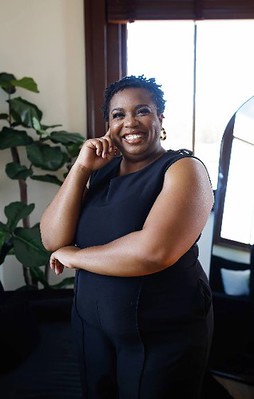
Dr. Ali Corey
Dr. Ali Corey is a counselor educator, clinician, and leadership consultant with extensive experience in training mental health
professionals and organizational leaders. She holds a doctorate in counseling and serves as a graduate professor, where she teaches
research, clinical practice, and leadership development in counselor education programs. Her professional focus lies at the intersection of trauma-informed care, organizational leadership, and equity-driven practices.
Dr. Corey has worked with educational institutions, clinical training programs, and community mental health organizations to foster trauma-informed leadership approaches that strengthen organizational culture, reduce burnout, and enhance client outcomes. Her scholarship and teaching emphasize strengths-based, relational leadership practices that integrate both clinical knowledge and
evidence-based leadership theory.
Participants in her sessions benefit from her ability to bridge clinical insight with practical leadership strategies, ensuring that complex research is translated into actionable skills for real-world application. With her combined background as a clinician, educator, and leadership trainer, Dr. Corey provides an engaging, research-informed, and practice-oriented perspective on what it means to lead
mental health organizations through a trauma-informed lens.
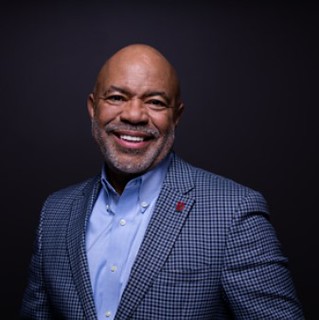
Lemuel W. Watson, PhD
Lemuel W. Watson, PhD is Senior Associate Vice Chancellor for Academic Affairs and Vice Provost for Community Engagement at Antioch University and the Coalition of Common Good.
He has been deeply engaged with the community as a personal and professional advocate through numerous arts, community, educational, and professional boards. He commits to leaving the world better than how he has found it. He genuinely loves those he meets and is curious to get to know them authentically. He moves about the world as an educator, advocate, leader, new thought minister, poet, and collaborator with various individuals and groups. He believes there is no separating life into compartments but that each day and all experiences help one to become fully awake.
Watson is also a Distinguished Professor and Dean Emeritus and Founding Executive Director of the Center for Innovation in Higher Education at the University of South Carolina and the former founding Executive Director of the Center for P-20 Engagement and Dean of the College of Education at Northern Illinois University as well as former Associate Vice President and Interim Vice Provost for Diversity and Inclusion, Dean of the School of Education at Indiana University Bloomington. He is the former host of Indiana University’s podcast On Illuminating: truth and Light, the South Carolina Educational Television series, Carolina Classrooms, and Fulbright Scholar to Belarus. He earned a BS in Business from the Moore School of Business at USC, an MA from Ball State University, his doctorate in higher education and policy from Indiana University at Bloomington, and a doctorate in spiritual studies at Emerson Theological Institute.
He has written books, monographs, and articles related to research on leadership, contemplative practices, underrepresented populations, LGBTQ+, public policy, and human development. He has obtained over $14 million in research funding from various organizations as a researcher. A seasoned leader whose career spans various industries, including educational, non-profit organizations, private, and entrepreneurship/small businesses. He has worked as a global consultant on leadership, public policy, and talent management issues. As a certified mindfulness teacher by Search Inside Yourself Leadership Institute and as a certified mindfulness organizational strategist by the Institute for Organizational Science and Mindfulness, he currently focuses on mindful leadership and talent management to enhance work and learning environments. Residing at the intersection of leadership and mindfulness as a researcher and practitioner, Lemuel creates spaces for silence, awareness, and self-inquiry to help individuals align their strengths and intentions to guide and lead. Through his integrative approach, he shares transformative, dedicated, and integrated tools for self-renewal, personal discovery, and capacity-building that ease clients on their journey toward peace, clarity, and freedom. He commits to leaving the world better than how he has found it.